Pensando más allá de los límites: rituales para un pensamiento de futuro (Futures Thinking) más expansivo
Grandes pensadores nos enfatizan la imposibilidad de predecir el futuro, porque el futuro no existe, lo creamos en el presente. Pero lo que opera en nuestras mentes es un programa para predecir consecuencias futuras automáticamente, desde el nacimiento tenemos esta respuesta biológica, por mucho que intentamos internalizar que el futuro no se puede predecir, la mente ejecuta predicciones de lo que puede ocurrir instantáneamente. Y nos hace tender a caer en la trampa de nuestros sesgos...
En nuestro cerebro se dispara el proyectar los posibles eventos futuros para nuestra sobrevivencia, por ejemplo, en la antigüedad el estimar el riesgo de amenazas en nuestro entorno, y en el presente imaginamos cuál será la respuesta de otros a lo que hemos dicho o vamos a decir, o cómo será el resultado de la próxima elección política de nuestro país. La capacidad mental que proyecta un posible resultado se activa inmediatamente, tomando nuestra atención y más si percibimos una "amenaza" para nosotros o para quienes nos rodean.
Nuestros pensamientos están condicionados más de lo que nos gustaría admitir.
Este patrón para reducir el riesgo y aumentar las probabilidades de supervivencia limita nuestra capacidad de potenciar nuestro pensamiento, y por ende nuestras acciones, ya que utiliza parte de nuestra energía y atención disponible. Y más importante aún, este hábito inconsciente de predecir lo que ocurrirá evita que imaginemos o que pensemos en el futuro de manera más consciente y estructurada, para así poder crearlo con nuestras acciones.
La predicción automática que hacemos además se fundamenta en nuestras creencias y sesgos actuales, entre ellos el pensamiento lineal -el más desacertado hoy día- estableciendo el camino que tomará nuestra imaginación; estamos condicionados más de lo que nos justaría admitir. Cada creencia y sesgo fija un límite a nuestra imaginación y creatividad. Así como cada creencia y sesgo al hacerse conscientes son una oportunidad para un punto de inflexión en nuestra percepción, y por ende en nuestras interpretaciones, emociones, acciones y resultados.
Necesitamos hacer consciente lo inconsciente, para ejecutar el arte del pensamiento creativo.
Entonces ¿Cómo enfocar nuestra mente y filtrar nuestras interpretaciones de nosotros mismos?
Tres rituales que podemos practicar:
- Escribe tus pensamientos diariamente: se conoce como un diario, este permite poner en blanco y negro nuestros pensamientos, Anna Frank escribió "el papel tiene paciencia infinita", es decir, la hoja en blanco toma todas nuestras palabras de manera incondicional, lo que nos permite observar en retrospectiva lo que pensamos. Muchas veces podemos encontrarnos con aprendizajes importantes al releer lo escrito, liberando nuestro potencial creativo al romper algún paradigma o creencia limitante gracias a esta reflexión en retrospectiva. Además de su utilidad en el capturar ideas y tomas de conciencia en el momento para su uso futuro.
- Conéctate con tu cuerpo físico para estar presente en el "ahora", siente la fuerza de gravedad actuando sobre tu masa, toma atención a la sensación del peso de tu cuerpo junto con tu respiración espontánea, dejando así a tus pensamientos descansar o surgir espontáneamente a la conciencia, esto antes de una sesión importante de toma de decisiones o de trabajo creativo personal o en equipo, para poder así buscar alcanzar el preciado "estado de flujo" o "Flow".
- Busca la incomodidad, tanto en nuestro entorno como en quienes lo conforman. El sumergirnos en espacios desconocidos como una nueva cultura, otra organización o grupo de personas que piensen diferente a nosotros, creará oportunidades para cuestionar nuestras interpretaciones, abriendo un espacio para el aprendizaje así como para la conversación y la reflexión, siempre y cuando nos movamos desde valores como el respeto, la confianza, la curiosidad y la humildad del poder estar completamente equivocados en nuestro punto de vista.
Finalmente; ¿Estás dispuesto a hacer el esfuerzo requerido de pausar en el presente, observar y jugar con tus pensamientos para imaginar posibles futuros? Después de todo, nuestra vida está moldeada por nuestra mente.
Bibliografía para profundizar:
- Echeverría, R. (1994). Ontología del lenguaje.
- Gregersen, H. (2018). Questions are the answer.
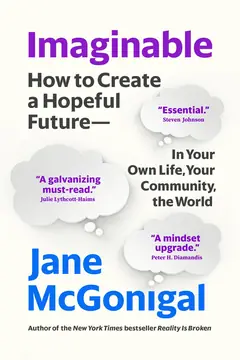
- McGonigal, J. (2022). Imaginable.
- Newport, C. (2016). Deep Work.
- Stephen, B. (2020). Full-spectrum Thinking.
- Smith, C. (2021). Mindfulness without the bells and beads.
- Scharmer, O. (2007). Theory U: Leading from the Future as It Emerges.
- Richardson, H., & Saxe, R. (2018). Development of predictive responses in theory of mind brain regions. Developmental science, e12863.
- Thornton, M. et al. (2019). The Social Brain Automatically Predicts Others' Future Mental States. Journal of Neurosciences.
Thinking beyond limits: rituals for more expansive Futures Thinking
Great thinkers emphasize the impossibility of predicting the future, because the future does not exist, we create it in the present. But what operates in our minds is a program to automatically predict future consequences, from birth we have this biological response, as much as we try to internalize that the future cannot be predicted, the mind executes predictions of what can happen instantly. And it makes us tend to fall into the trap of our biases...
In our brain, projecting possible future events for our survival is constantly fired, for example, in ancient times, estimating the risk of threats in our environment, and in the present, we imagine what the response of others will be to what we have said or are going to say, or what the outcome of the next political election in our country will be like. The mental capacity that projects a possible result is activated immediately, taking our attention and more if we perceive a "threat" for ourselves or for those around us.
Our thoughts are conditioned more than we would like to admit.
This pattern to reduce risk and increase the chances of survival limits our ability to enhance our thinking, and therefore our actions, since it uses part of our available energy and attention. More importantly, this unconscious habit of predicting what will happen prevents us from imagining or thinking about the future in a more conscious and structured way, so that we can create it with our actions.
The automatic prediction that we make is also based on our current beliefs and biases, including linear thinking -the most unfortunate today- establishing the path that our imagination will take; we are conditioned more than we care to admit. Every belief and bias set a limit to our imagination and creativity. Just as each belief and bias when becoming aware is an opportunity for a turning point in our perception, and therefore in our interpretations, emotions, actions, and results.
We need to make the unconscious conscious, to execute the art of creative thinking.
Then, how to focus our mind and filter our interpretations from our consciousness?
Three rituals that we can practice:
- Write your thoughts daily: it is known as a personal diary, this allows us to put our thoughts in black and white, Anne Frank wrote "paper has infinite patience", that is, the blank sheet takes all our words unconditionally, which that allows us to look back on what we thought. Many times, we can find important lessons when rereading what has been written, releasing our creative potential by breaking some limiting paradigm or belief thanks to this retrospective reflection. In addition to its usefulness in capturing ideas and awareness at the moment for our future use.
- Connect with your physical body to be present in the "now", feel the force of gravity acting on your mass, pay attention to the sensation of the weight of your body and your spontaneous breathing, thus letting your thoughts rest or arise spontaneously to consciousness, this before an important decision-making session or personal or team creative work, to seek to achieve the precious state of "Flow".
- Look for discomfort, both in our environment and in those who compose it. Immersing ourselves in unknown spaces such as a new culture, another organization or a group of people who think differently from us will create opportunities to question our interpretations, opening a space for learning as well as for conversation and reflection, as long as we move from values as respect, trust, curiosity and the humility of being able to be completely wrong on our views.
Finally, are you willing to make the required effort to pause in the present, to observe and play with your thoughts to imagine possible futures? After all, our life is shaped by our mind.
Bibliography to go deeper:
- Echeverria, R. (1994). Ontología del lenguaje.
- Gregersen, H. (2018). Questions are the answer.
- McGonigal, J. (2022). Imaginable.
- Newport, C. (2016). Deep Work.
- Stephen, B. (2020). Full-spectrum Thinking.
- Smith, C. (2021). Mindfulness without the bells and beads.
- Scharmer, O. (2007). Theory U: Leading from the Future as It Emerges.
- Ruxandra, T. et al. (2021). Automatic Sensory Predictions: A Review of Predictive Mechanisms in the Brain and Their Link to Conscious Processing. Journal Frontiers in Human Neuroscience.
- Thornton, M. et al. (2019). The Social Brain Automatically Predicts Others' Future Mental States. Journal of Neurosciences.